How a Generative AI Course Can Transform Your Daily Work
What Generative AI Means for Your Day-to-Day Tasks
Generative artificial intelligence is the branch of AI that creates new content - text, images, code, even music - from patterns it learns. For someone in administration, operations or customer service, that sounds like a futuristic tool. But it is already working inside common software you may use: email suggestions, chat responses, document templates. What changes when you learn to build and deploy a simple generative AI application yourself is the ability to shape that technology to your own problems, not just use someone else's preset features.
This article explains what generative AI is, how it works in practical office settings, and what taking a focused course on the subject means for a professional who handles paperwork, processes or people every day. The goal is to give you a clear picture of the skills involved and the kind of results you could create, without hype or jargon.
What Generative AI Actually Does
At its simplest, generative AI learns from a large collection of examples - emails, reports, customer chat logs - and then produces new examples that look similar. It does not "think" or "understand" in the human sense. Instead, it finds statistical patterns: which words tend to follow which other words, which sentence structures appear in a complaint versus a compliment, which fields in a form usually contain a date rather than a name.
When you give it a prompt, it generates output that fits those patterns. That is why a well-trained model can draft a professional reply to an irate customer, summarise a long operations report in three bullet points, or write a short piece of code that renames hundreds of files in a folder. The key limitation is that the model has no awareness of truth or appropriateness; it only reproduces patterns from its training data. That makes it powerful when guided by someone who understands the business context and knows how to check the output.
Where It Fits in Administration, Operations and Customer Service
Administrative work is full of repetitive writing: internal memos, meeting notes, status updates, policy summaries. A generative AI tool can take rough notes or a few keywords and produce a first draft in seconds. The human then edits, rather than starting from a blank page. That cuts the time spent on routine documents significantly.
Operations teams often deal with data that needs to be transformed - logs that must be turned into reports, inventory lists that need to be formatted for different systems, instructions that have to be rewritten for different audiences. Here, generative AI can act as a translator between formats. For example, a model can take a spreadsheet of shipment data and generate a plain-language weekly summary, or turn a technical troubleshooting guide into a customer-facing FAQ.
Customer service agents handle high volumes of similar questions. A generative AI application can suggest responses, provide consistent product information, or even handle the first interaction in a chat queue, leaving the human agent free to focus on complex or sensitive cases. The trick is to design the prompts and the workflow so the AI stays within safe boundaries and the human always has the final say.
How a Course Helps You Go Beyond Using Tools to Building Them
Many professionals already use AI features in their email or CRM without thinking about it. But there is a gap between being a user and being someone who can create a custom AI solution for a specific workplace problem. A structured generative AI course bridges that gap by teaching the practical steps: how to choose a model, how to prepare your data, how to write prompts that produce useful output, and how to deploy the application so your colleagues can actually use it.
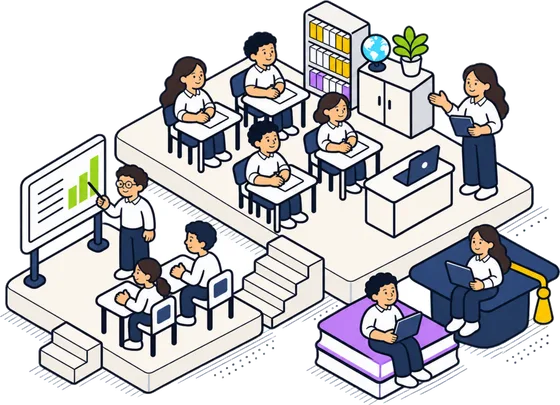
One example of such a programme is the United Ceres College AI application development course. It is a two-day classroom course in Singapore aimed at professionals who want to build and deploy a simple generative AI application. The focus is on hands-on work - you leave with a working tool, not just theory. That kind of outcome is what makes the difference between knowing about AI and being able to apply it to your own workflows.
During the course, you would typically work through the full cycle: define a problem that generative AI can solve, select a suitable model or API, craft prompts that give reliable results, test the output for accuracy and bias, and package everything into a simple interface for your team. You do not need to be a programmer to do this; many modern platforms let you build applications by dragging and dropping components, or by writing a few lines of code in a familiar language like Python.
What to Watch Out For When Adopting Generative AI
Generative AI is not magic. It makes mistakes, sometimes confidently. A model might invent a fact, a date, or a name that looks plausible but is completely wrong. This is called hallucination, and it means you must always verify the output, especially in customer-facing or compliance-heavy contexts. A course that covers deployment should also cover validation: how to set up checks so the AI does not go live with nonsense or offensive content.
Another concern is data privacy. If you feed customer information into a public AI service, that data may be stored or used to train the model further. For many organisations, that is unacceptable. The United Ceres College AI application development course addresses this by teaching participants how to run models locally or within a secure environment, so sensitive data never leaves the organisation. Understanding these boundaries is as important as knowing how to write a prompt.
Finally, there is the question of job roles. Some professionals worry that learning to build AI tools means automating themselves out of a job. In practice, the opposite tends to happen. The people who understand how to apply generative AI become the ones who design the workflows, set the policies, and handle the exceptions. They move from doing repetitive tasks to supervising and improving systems. That shift requires new skills, and a focused course is a direct way to gain them.
Practical Steps You Can Take Right Now
If you are curious about what generative AI can do for your work, you do not need to wait for a course to start. Try one of the free, publicly available large language models and ask it to help with a real task: draft a reply to a common customer query, summarise a long email thread, or rewrite a paragraph in a different tone. See what it produces. Notice where it gets it right and where it misses context or makes assumptions. That simple experiment will show you both the potential and the limitations.
When you are ready to go further, look for a course that emphasises building and deploying, not just watching demonstrations. The best learning happens when you have a specific problem in mind and you build a solution for it. That is the approach taken by programmes like the one offered by United Ceres College, where the entire structure is built around creating a working application by the end of the second day.
Generative AI is not a distant technology. It is a practical tool that can reduce the time you spend on routine writing, data formatting and customer responses. Learning to build and deploy a simple application gives you control over how that tool works in your environment. For anyone in administration, operations or customer service, that is a skill worth developing.
United Ceres College on social media
 Twitter
 LinkedIn
 Facebook
 Instagram
 YouTube